Social · iOS
Limbo
Keep your groups alive.
A social app built to keep friendships active after the shared context that first brought people together starts to fade. Limbo lowers the activation energy of reaching out by giving every group a reason, and a place, to begin again.
The problem
Friendships rarely end on purpose. A dorm, a class, a team, or a shared obsession once gave the group something to talk about. When that context disappears, nobody knows how to restart the conversation without it feeling forced, and the friendship stalls out in what we called the Limbo Zone.
My role
Limbo began as a Stanford senior capstone with two other students. I created the original concept, set the product direction and feature set, designed the interface, built the brand, and engineered the app. One teammate led user research and surveys while another led organization of the Supabase backend, though I contributed to both. After the capstone ended, I kept designing, building, and shipping Limbo on my own.
The design principle
Reduce the activation energy. Every feature had to answer one question: why would someone open this app tomorrow? So Limbo takes the awkward first step for you, with a shared prompt, a private circle, a reason to reply. People never needed convincing that their friendships mattered; they needed permission and an easier place to start.
01 · The Daily
One prompt. Everyone answers.
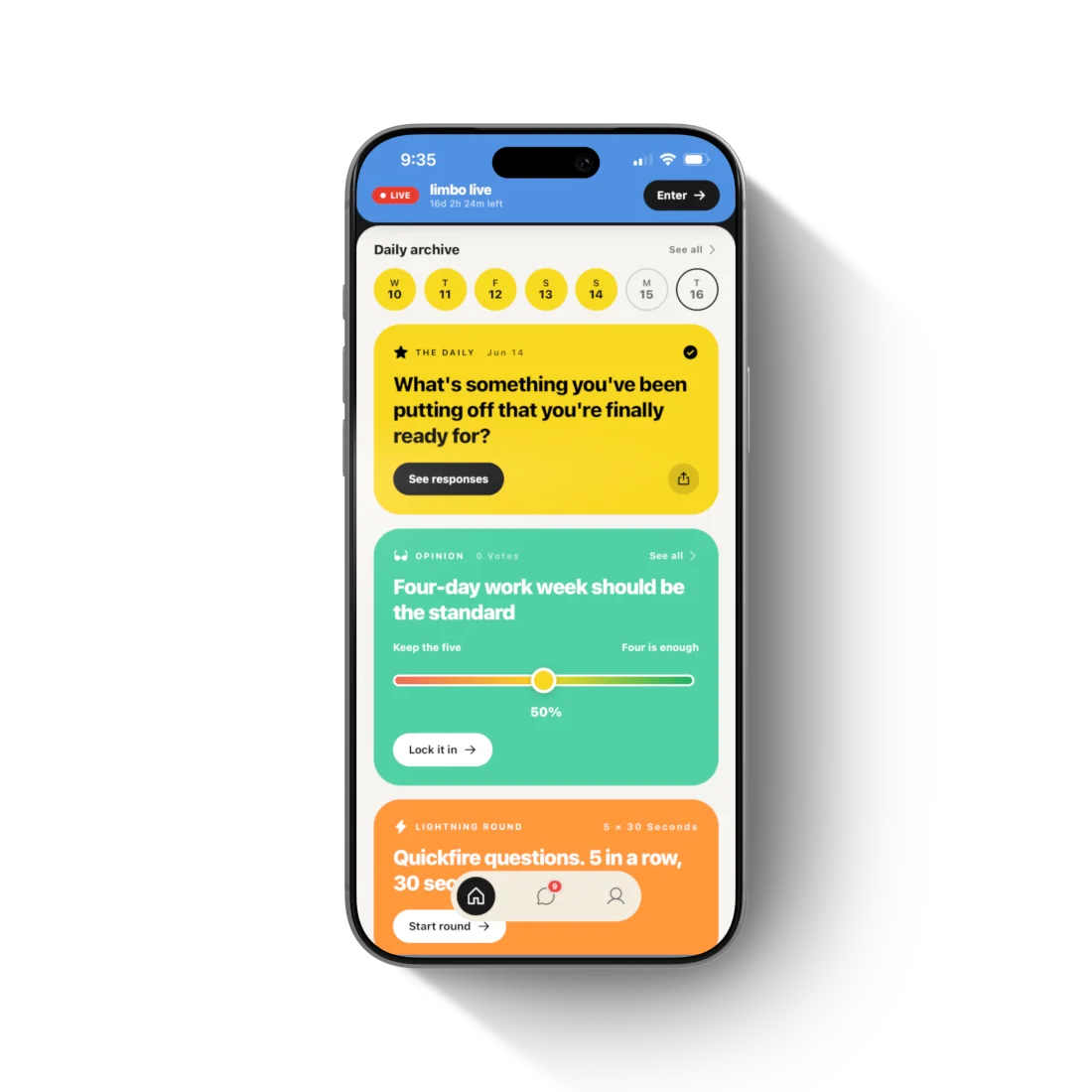
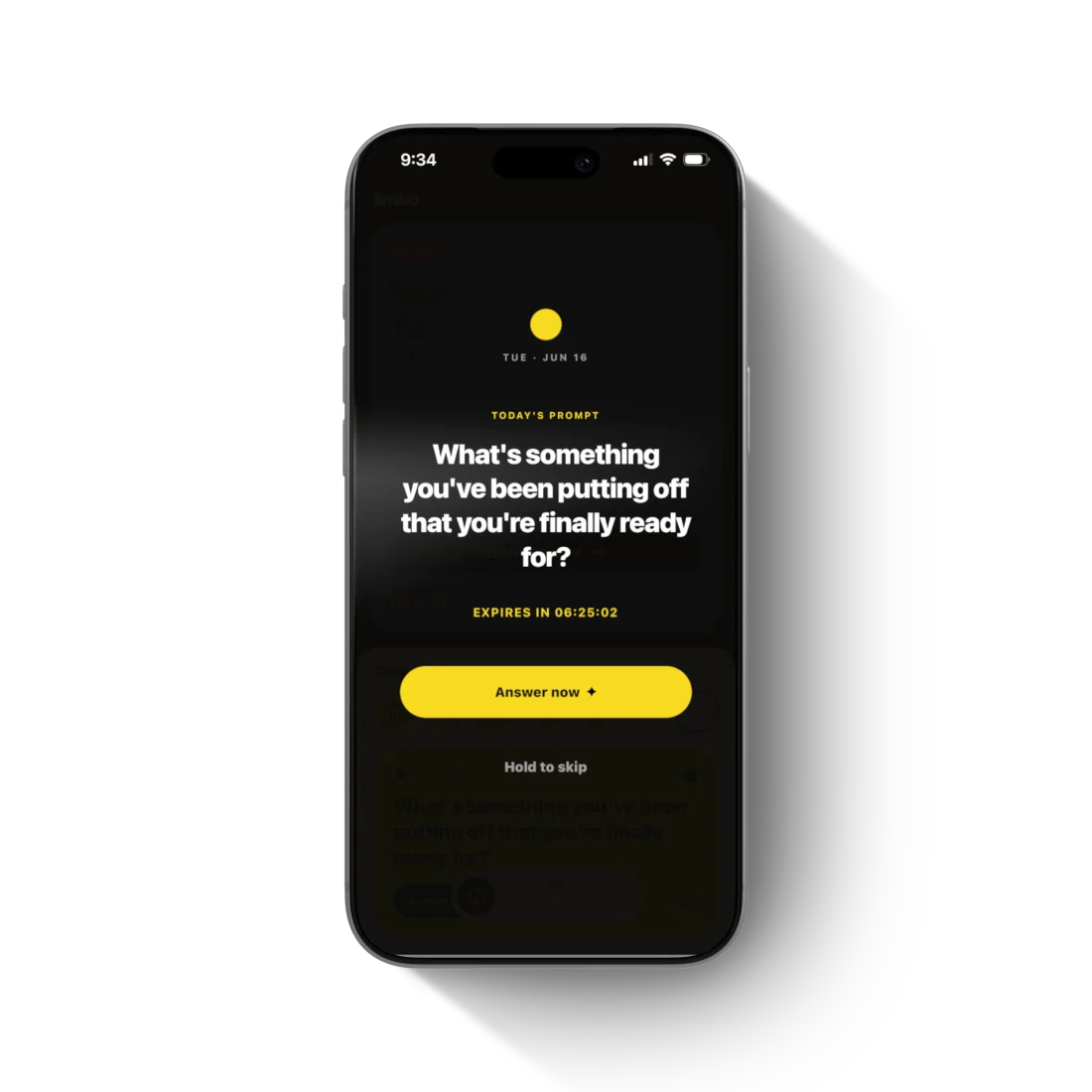
A single app-wide question lands each day, designed to reveal something new about the people you already know. Responses to The Daily stay hidden until you answer. Participation comes before observation, so there's no passive scrolling and no lurking. You reply, and then everyone's answers open at once.
02 · Circles
Your people, in context.
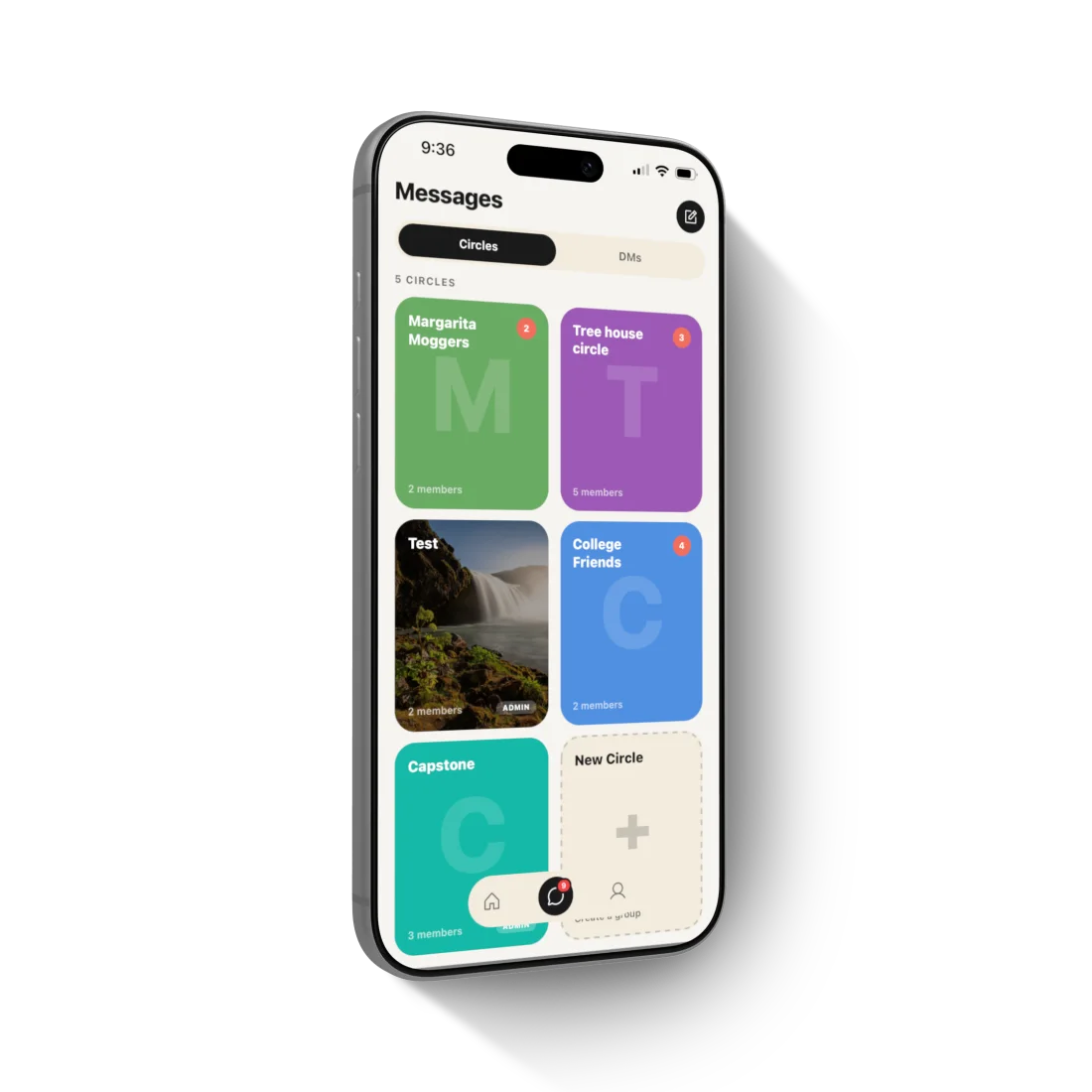
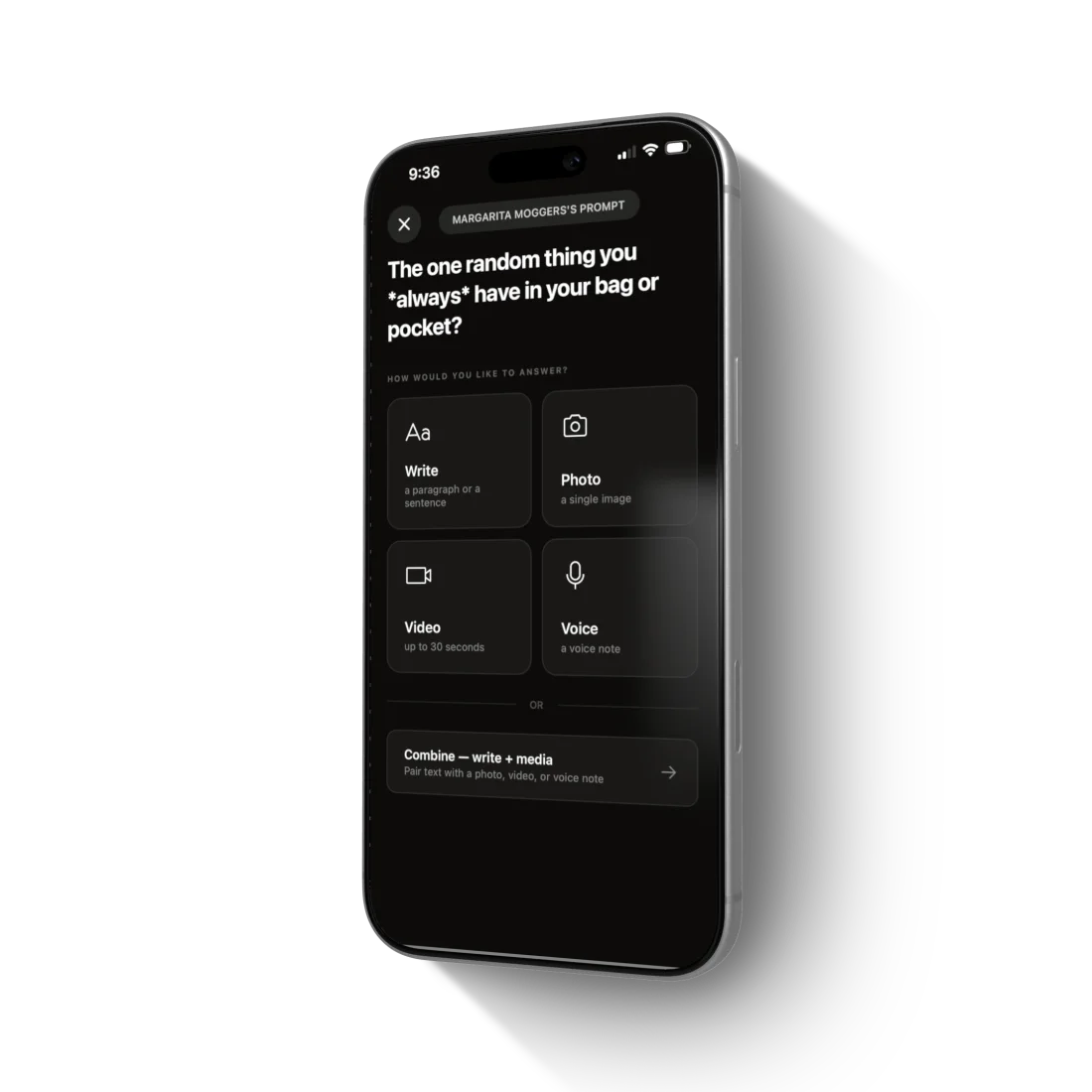
Circles are private spaces built around a group's existing context: a fantasy league, a show you all watch, a class, a friend group. AI tunes each circle's prompts to its specific identity, and inviting someone to a group with a real reason to exist felt far more natural than asking them to join another social network. There are no follower counts, no like totals, no engagement scores; the moment you add an audience, people start performing instead of sharing.
03 · Explore, Opinions & Live
Value before friends join.
A friends-only app can feel empty during onboarding or on quieter days, so Limbo gives you something meaningful to do before a single friend shows up. Opinions are app-wide slider questions with results hidden until you vote, which broadens participation without reintroducing popularity metrics. Live Events are time-limited prompts everyone answers together, recreating the energy of being in the same room. The prompts themselves range from debates to lightning rounds to drawing challenges.
04 · Scrapbook
A one-page you.
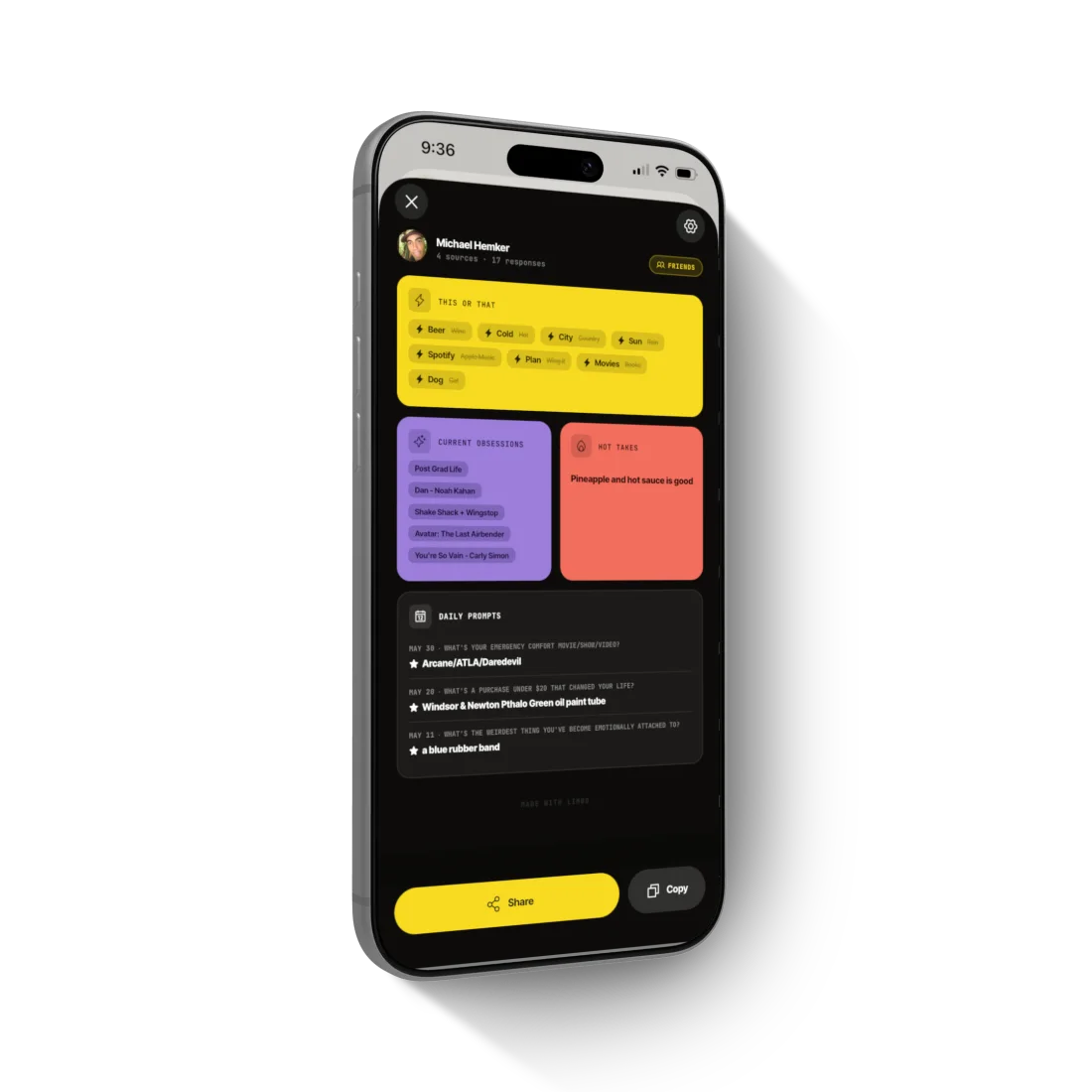
Every response you give collects into a personal Scrapbook that gradually becomes a single-page portrait of your personality, memories, and interests. It's the solo reward loop, a reason to keep answering that pays off whether or not your circle is active today.
05 · On Desktop
The same room, on the web.
Limbo isn't only the phone in your pocket. The desktop web app carries the Daily, your Circles, and Messages onto a larger canvas, so the conversation keeps going wherever you happen to be.
Outcome
I built Limbo in React Native and Expo on a Supabase backend, with private groups, multimedia responses, notifications, live interactions, and AI-generated prompts tuned to each circle. The hardest part was App Store submission: because I kept developing while builds were under review, every rejection meant revising both the submitted version and the moving production app. After several months of iteration, Limbo launched in May 2026.
It crossed 100 profiles in its first launch window, but the outcome I value most is that groups of friends keep using it without me prompting them. That organic activity is what told me it had found a genuine place in some relationships, rather than just satisfying a capstone brief.
Limbo taught me to judge every social feature by one question: why would someone open this app tomorrow? People didn't need convincing that their friendships mattered. They needed a little context, permission, and an easier first step. Limbo is my attempt to hand them all three.
Gallery
In three dimensions
A closer look at the screens that make up Limbo, rendered as floating device mockups.
On the web
limbo.social ↗